If you’ve heard the term “IPTV” but aren’t sure what it means, you’re not alone. IPTV stands for Internet Protocol Television — a way of delivering television content over the internet instead of through traditional cable wires or satellite dishes. Instead of receiving a broadcast signal, your TV or device streams the content as data, much like watching a video online.
IPTV has grown alongside the broader shift toward internet-based entertainment. Whether it’s a live sports broadcast, a TV series, or an on-demand movie, IPTV uses the same basic internet connection you already have at home to bring that content to your screen. This guide breaks down exactly how IPTV works, the different types of IPTV services that exist, how it compares to cable and satellite, and what you’d need to actually use it.
Table of Contents
what is iptv, usa iptv subscription, best iptv usa,usa iptv, iptv television, iptv system, iptv platform, iptv network, tv iptv, live iptv, stream iptv, streaming iptv, iptv streaming, iptv live tv, live tv iptv
How IPTV Works
Traditional television — cable and satellite — delivers content through dedicated infrastructure. Cable TV travels through coaxial cables laid specifically for that purpose. Satellite TV is beamed from an orbiting satellite to a dish mounted on your home. In both cases, the content reaches your TV through a private, purpose-built delivery system that has nothing to do with your home internet.
IPTV works differently. It delivers television content using the Internet Protocol (IP) — the same underlying technology that powers websites, email, and video calls. When you watch something over IPTV, the video is broken into small data packets, sent over the internet to your device, and reassembled into a continuous video stream in real time.
A simple analogy: think of cable TV like a fixed water pipe running directly from a reservoir to your house — the water (channels) flows constantly whether you use it or not, and you’re limited to whatever the pipe carries. IPTV is more like ordering bottled water delivered on demand: it travels over the general road network (the internet) that also carries everything else, and you request a specific bottle for a specific delivery — rather than tapping into a single, dedicated pipeline.
This is why IPTV can offer more flexibility than traditional broadcast methods: because it rides on general-purpose internet infrastructure, it isn’t tied to a fixed regional signal or a specific set of physical wires.
Types of IPTV Services
IPTV isn’t a single kind of service — it generally falls into three categories, which are often combined within the same platform.
Live TV
This is the closest equivalent to traditional broadcast television. Live IPTV streams channels in real time, so you’re watching the same broadcast at the same moment as everyone else tuned in — news, sports, and scheduled programming included.
Video on Demand (VOD)
VOD content is stored on a server and made available for viewers to watch whenever they choose, rather than at a fixed broadcast time. This includes libraries of movies, TV series, and other pre-recorded content that you can start, pause, and resume at your own pace — similar in concept to how on-demand streaming platforms work.
Time-Shifted / Catch-Up TV
Time-shifted TV lets viewers watch a program that already aired, typically within a limited window after the original broadcast (for example, the last 24 to 72 hours [VERIFY]). It bridges the gap between live TV and VOD — you didn’t catch the show live, but it hasn’t been folded into a permanent on-demand library either.
IPTV vs Cable vs Satellite
Each delivery method has a different underlying infrastructure, and that difference shapes cost, flexibility, and setup requirements.
| Factor | IPTV | Cable | Satellite |
|---|---|---|---|
| Infrastructure needed | Internet connection | Coaxial cable line | Satellite dish + clear sky view |
| Installation | Minimal (device + internet) | Professional cable hookup | Dish installation required |
| Flexibility | Can typically be used on multiple device types and locations | Tied to wired connection at the property | Tied to dish location and line of sight |
| Channel access | Varies by service/provider | Set by regional cable provider packages | Set by regional satellite provider packages |
| Weather sensitivity | Depends on internet stability | Generally stable | Can be disrupted by severe weather |
| Ongoing cost structure | Varies widely by service | Typically fixed monthly cable bill | Typically fixed monthly satellite bill |
The right fit depends on what you already have in place — a reliable internet connection versus existing cable or satellite infrastructure — as well as regional availability, since cable and satellite offerings differ by provider and location [VERIFY].
What Do You Need to Use IPTV?
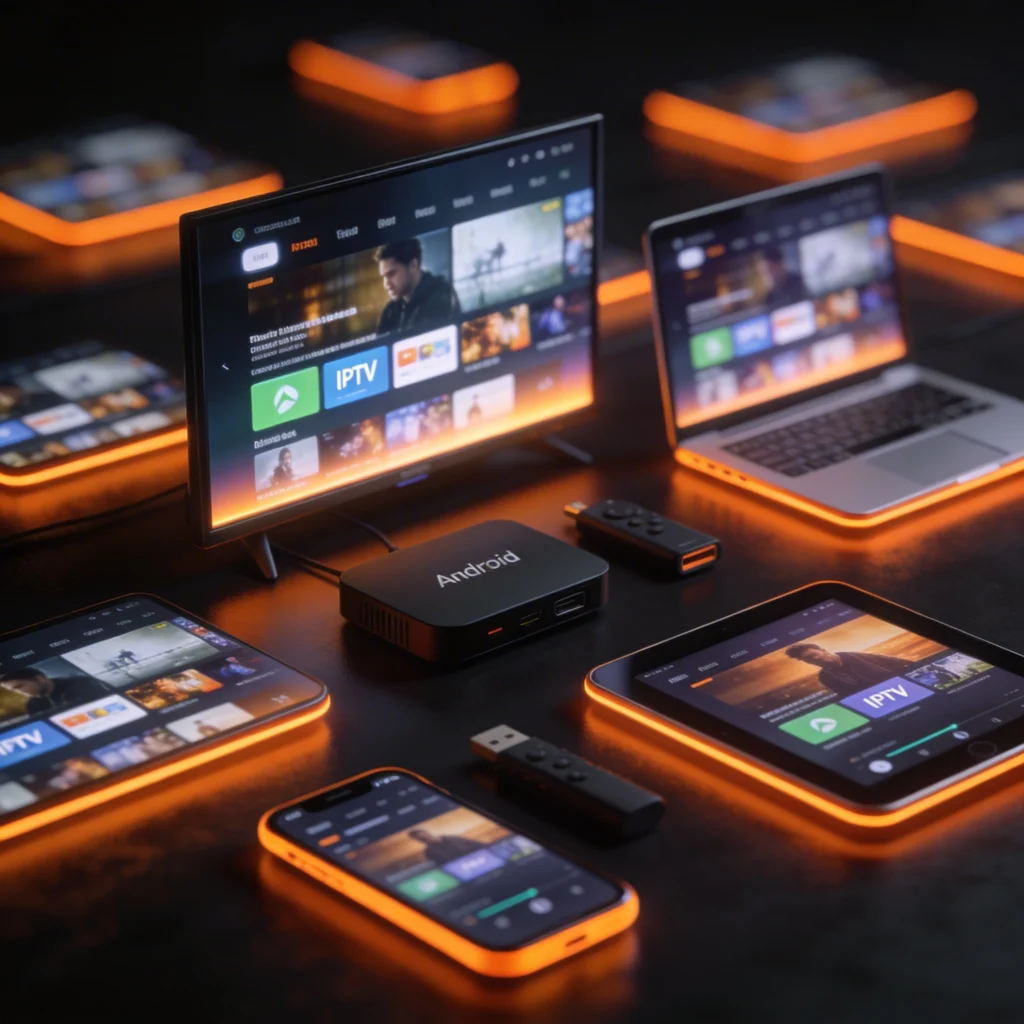
IPTV doesn’t require the specialized hardware that cable or satellite does. Generally, you need:
- A stable internet connection — since content is streamed as data, connection speed and stability directly affect playback quality.
- A compatible device — this can include smart TVs with built-in app support, dedicated streaming boxes, mobile phones or tablets, or media player devices connected to a standard television.
- An IPTV application or platform — software that organizes and plays the streamed content, similar in concept to any other streaming app.
Because it runs over general internet infrastructure rather than dedicated cable or satellite equipment, IPTV tends to be more portable — the same account can often be used across multiple types of devices, provided each one has a compatible app or player.
Is IPTV Legal?
IPTV, as a technology, is completely legal. It’s simply a method of delivering television content over the internet — the same underlying technology used by many well-known, licensed streaming platforms. The legality question isn’t about IPTV itself, but about how a specific service sources and licenses its content.
Licensed, legitimate IPTV service operate the same way traditional broadcasters do: they secure proper licensing agreements with content owners and broadcasters before distributing that content to subscribers. These services are legal to use in the same way any authorized streaming platform is.
The concern arises with unauthorized IPTV services that redistribute copyrighted broadcasts — including live sports, premium channels, and pay-per-view events — without securing the necessary licensing agreements. Using or subscribing to services that knowingly distribute unlicensed content can carry legal risk, and regulations around this vary by country. Anyone evaluating an IPTV service should look into how that specific provider sources its content rather than assuming legality based on the technology alone.
Frequently Asked Questions
Is IPTV the same as streaming? IPTV is a form of streaming, but it specifically refers to television content — live channels, VOD, and catch-up programming — delivered over an IP network, rather than the broader category of internet video in general.
Do I need special equipment for IPTV? No specialized hardware is required beyond a device capable of running an IPTV app (a smart TV, streaming box, phone, tablet, or media player) and a stable internet connection.
Can I watch live sports through IPTV? Live IPTV services can include live sports channels, similar to how live sports appear on traditional cable or satellite packages, depending on what a given service offers.
How much internet speed does IPTV need? Streaming quality depends on your connection speed, with higher-resolution streams generally requiring faster and more stable internet [VERIFY exact speed recommendations].
Is IPTV cheaper than cable or satellite? Cost varies significantly by service and depends on what’s included, so it isn’t accurate to say IPTV is universally cheaper — it depends on the specific plan being compared.
Why do some people distrust IPTV services? Because IPTV is just a delivery technology, its reputation depends heavily on individual providers. Some operate with full content licensing, while others distribute content without authorization, which has contributed to mixed perceptions of “IPTV” as a category.
Now that you understand what IPTV is and how it works, the next step is figuring out what a service actually costs and which type of plan fits your needs. You can explore our IPTV subscription cost and pricing guide for a breakdown of typical pricing structures, or compare your options in our IPTV providers comparison guide to see how different services stack up.